 |
Ten Commandments of GodMher: Did you hear that? He said he wouldn’t remember it all. I won’t remember either. Maybe.
|
 |
The Parable of LabourersOne morning a householder went out to look for labourers for his garden. He agreed on a daily fee with them – one penny. However, after the labourers finish the work, many of them complain. In the Gospel parable, the garden symbolizes the Kingdom of God. Why are the labourers dissatisfied, what does the householder answer them? Markos Mangasaryan provides explanations. |
 |
The SunThe stars are actually far bigger, but when looking from the Earth they are like some tiny shiny dots. That is because they are so-soooo very far away! The closest star is at 150 milion kilometers distance. And to know what star this is you should ask Pistachio. |
 |
The Parable of the Pharisee and the Tax CollectorThe Pharisee and the tax collector pray in the Church. One stands proudly in a secluded area and the other one doesn’t even lift up his eyes. What did the Pharisee and the tax collector ask from the Lord and what answer did they get?
|
 |
The Parable of LazarusThe Gospels tell about a rich man, who was clothed in purple and fine linen and fared sumptuously every day. And there was a certain poor man named Lazarus which was laid at his door and covered with sores waiting for bread crumbs.
|
 |
The Parable of Unjust StewardThe Gospels tell about a steward of a rich man. The Steward was blamed for wasting the goods of his lord. The rich man called him and made him give an account of his stewardship and leave. Now, what did the steward do? What does the commandment that Christ gave at the end of this parable on making themselves friends of the mammon, mean?
|
 |
The Return of the Prodigal SonOne man had two sons. The younger one demands his inheritance from his father, and turning all his property to money, leaves his home…. That son is called prodigal. Often our fathers call the elder son prodigal too, as he protested against his father for forgiving and making a feast to celebrate the return of his younger brother… Markos Mangasaryan provides explanations. |
 |
WasteWhen the waste is moved from our garbage cans and street garbage cans and piled up in the landfills, its starts emitting hazardous gases, which come from those landfills and enter our houses and streets thus posing a threat to our health. So this means that there is no escape from the waste? It turns out there is – the hazardous waste needs to be made into something useful. This is what Pistachio tells us this time. |
 |
The Parable of Unjust JudgeA judge gets sick and tired with the requests of a widow decides to end the lawsuit of this woman. Her problem is solved. In this parable, Christ calls the judge unjust...
|
 |
The Parables of Lost Sheep and Lost Money“What man of you, having an hundred sheep, if he lose one of them, doth not leave the ninety and nine in the wilderness, and go after that which is lost, until he find it?” (Luke 15.4).
|
 |
The Parable of Fruitless Fig TreeOne man planted a fig tree in his garden. He called the vine-dresser and told him to cut it as it didn’t bear any fruit for three years. The vine-dresser set a condition…
|
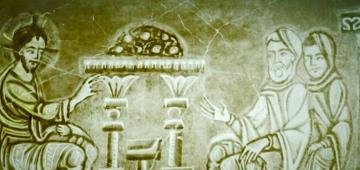 |
The Parable of Three LoavesThis parable is found only in the Gospel of Luke. As narrated by the Evangelist, Christ tells the parable of three loaves right after teaching His disciples the Lord’s Prayer. It is a reminder of the result of a steadfast, persevering prayer… Father Markos Mangasaryan provides explanations.
|