 |
Holiday Culture: Ruzanna TsaturyanNew Year - a new day The cultural meaning of New Year in Armenian reality is, first and foremost, the end of the old and the acceptance of the new. And especially on New Year's, the Armenian table was abundant and delicious. And when the family gathers around the table, remembering, sharing, and being grateful, New Year goes beyond the competition of luxury, the danger of gluttony, and bread becomes a symbol of the continuation of life, wheat and pilaf - of fertility, honey and dried fruits - a symbol of a sweet life. |
 |
Modern Music: Vache SharafyanMusic, of course, maintains a connection with its time. But contemporary music is not limited to the time of its creation. It forms a new language, a new form, a new way of thinking. Also, a unity of memory and idea. |
 |
One shotThe changes in the culture and mindset of short film and short films in the last decade have in turn led to a society expecting short and concise things to say. However, the magic of cinema continues to remain in the hall with the lights turned off, in the deep silence. The most important and real feeling in the history of the creation of the documentary film “Hevq” by Gagik Ghazare, a participant in the 44 Days, is the Land. There is nothing more real than the Land. |
 |
The lost sounds of dying instrumentsArmenian national musical instruments are diverse and have a history spanning thousands of years. However, today only the duduk is very popular, unlike other instruments, which are also called “dying instruments.” By rediscovering the lost sounds of dying instruments, perhaps we will be more complete and balanced. |
 |
National danceNational dance is the living environment where the character, value system, and historical experience of our people have been preserved. National dance reflects our spirit, our collective strength, and our inner discipline. Knowledge of national dance is not a technical skill, but a deep recognition and awareness of national identity. How did the Genocide, deportations, and repressions of the Soviet period against the Armenian people affect and what consequences did they have on national dance? |
 |
Contemporary ArtContemporary art, as a restless thought of time, a questioning and intervention of the world, an attempt to formulate a way of life, to whom is it addressed and does it need to find an audience? John Cage's "4.33", the performances of Beuys, Marina Abramović, Catalani, as the most vivid manifestations and new meanings of contemporary art, suggest seeing new possibilities in this ever-changing world. |
 |
Persian Sufi poetryThe two greatest figures of Persian Sufi poetry, Rumi and Hafez, lived and created a century apart. But both sought God in love and freedom. Rumi leads man on a spiritual path where the ego is burned to reveal the truth. And Hafez travels the same path with a smile, with irony, with a glass of wine. |
 |
The unfinished ending of CascadeThe Municipality has announced that the construction of the upper part of the Cascade is beginning according to the project they have proposed. Meanwhile, there is an original, founding, approved, unfortunately, incompletely implemented project, co-authored by Jim Torosyan, Sargis Gurzadyan, Aslan Mkhitaryan. In fact, the north-south axis of the capital's plan will be broken. The Municipality's talk about the Cascade is peppered with worrying quotes from architects, but the presented project indicates otherwise. |
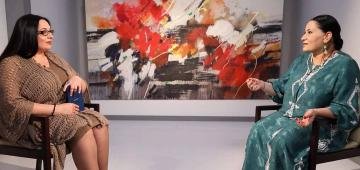 |
Carpet weaving
The carpet was created, as Foucault defined it, as “a special kind of space: heterotopia” and a reflection of the oriental garden. Why are women the authors of these unique worlds? What are the real connections between the legends of Armenian red carpets and reality? Why is Armenian carpet weaving not in its rightful place on the world cultural map? Marina Baghdagyulyan discussed the topic with art critic Anush Hakobyan on the “Sixth Day” program.
|
 |
What is post-war Armenian abstract art about?At the beginning of the 20th century, between and after the two world wars, the “children” of the times of pain, shocks and destruction came - representatives of abstract art. They created a new relationship between man and art, based on intellect and concept. And what is Armenian abstract art about in the post-war period? If the images of representatives of European abstract art were accompanied by the poetic words of Jacques Prévert, then the art of Khachatur Martirosyan is Grigor Narekatsi. |
 |
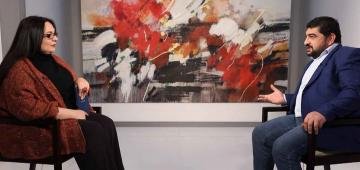
CascadeWhat is the significance of the Cascade for the structure's architect Jim Torosyan and other partners? The Cascade is the architectural embodiment of beauty, national symbols, and Armenian cultural identity. Marina Baghdagulyan spoke with architect Karen Balyan about the copyright of the Cascade and the political-economic and consumer interests of new projects. |
 |
Theater, guest: Arman NavasardyanWhy was pathos devalued and what is its real meaning, what is the theater's message to the Armenian audience living through difficult post-war times, what emotions did the artist experience when he took the stage during the war? Marina Baghdagyulyan hosted actor Arman Navasardyan at the "Day 6" pavilion. |
Day 6
And God said, Let us make man in our image, after our likeness: and let them have dominion over the fish of the sea, and over the fowl of the air, and over the cattle, and over all the earth, and over every creeping thing that creepeth upon the earth….And God saw everything that he had made, and, behold, it was very good. And the evening and the morning were the sixth day.
The author and host of the TV series “Day 6” is a priest. He takes interest in the attitude of an Armenian today towards life, Christian ethics, universal values. The guests of pavilion include men of art, science, politics, economics, education and media, who are zealous for the Armenian Church, Christian faith and share their concerns about complicated and problematic issues, related to organizing public life, with the hosting priest.
Frequency: Every Saturday, at 22:00
Rerun: Monday, at 13:30