 |
Crisis in Urban DevelopmentThe famous Vitruvian Triad of Roman encyclopedic architect Marcus Vitruvius, which says that a structure must exhibit the three qualities of firmitas, utilitas, venustas – that is, it must be solid, useful, beautiful, were approved yet back in c. 1 BC. Now, more than two milleniums later, we build cities, which structures’ solidness is dubious, coefficient of usefulness – unknown, and the beauty is a topic of political jokes. What are the main problems we confront when need arises not only to create well, but also to plan? Urban engineer Gurgen Musheghyan and architect Boris Kocharyan talk about the crisis of thought in the urban development. The conversation is run by Anna Sargsyan. |
 |
Davit Hakobyan and Aram GrigoryanStage director, artist Davit Hakobyan and Aram Grigoryan often joke that they are friends since immemorial days; they were fifth graders attending the school of fine arts. Very quickly they got close and are inseparable up to day. Davit considers Aram the first and the biggest critic of his works. Aram, in his turn, is delighted in his friend’s great dedication to art. To both of them, friendship is a huge gift to be cherished. |
 |
Davit Muradyan, part 2Davit Muradyan considers the goals of religion and culture as the same; both are designed for the improvement of man. The conversation with Rev. Fr. Ruben Zargarian is about the art-culture relationships and preservation mechanisms for culture. |
 |
Davit MuradyanThe language is a memory, national integrity, the language is a vital means of forming independence and identity. The conversation of Rev. Fr. Ruben Zargarian with film critic, writer Davit Muradyan on the inmost and applied role of language. According to the film critic, the basis for any culture makes the language, however, to his pity, at present, we are not making use of the huge ethical, cognitive, spiritual reserves that the Armenian language possesses. |
 |
Crisis of Contemporary ArtWhat issues does the contemporary art attempts to solve, are these issues available to us? Is there any crisis in the contemporary art? How does the crisis of political thought impact on art? The topic is discussed by art critic Seda Shekoyan and artist Arman Grigoryan. The conversation is lead by Anna Sargsyan. |
 |
Henrik Edoyan, Part 2 – Moving towards BalanceThe culture of 20th century is described as a crisis culture. A culture that has lost its spiritual focus and is exhausted meaning-wise. According to culturologists, modern culture has been replaced by anti-culture, automatic thinking. Hayk Hambardzumyan is discussing the de-humanization of art, historical course of creation and distortion of the spiritual art, as well as the chances for restoration of balance, with the writer Henrik Edoyan. |
 |
Hamlet MartirosyanFollowing the “Daredevils of Sassoun” or “David of Sassoun” epic, the Armenian pictograms with 15-20 thousand years of history are planned to be inscribed next in the UNESCO Representative List of the Intangible Cultural Heritage of Humanity. Hamlet Martirosyan has been doing a research of the pictograms for quite a long period. To the researcher, Armenian pictograms are a unique writing system and relate to other ancient writing systems – that of Egyptian and Sumerians. Hayk Hambardzumyan had a conversation with Hamlet Martirosyan referring to these and other related issues. |
 |
Artyom Vardanyan and Mher MelkonyanArtyom Vardanyan and Mher Melkonyan are friends for 30 years now. Artyom returned to Armenia after living in Netherlands for many years and fulfilled his old-time dream of establishing a zoo. His friendship with Mher, going back as far as their student years, has now turned into a family friendship – Artyom is the Godfather of Mher’s children. |
 |
Gagik GinosyanGagik Ginosyan, Artistic Director of Karin Folk Dance Ensemble, culture expert, is sure that only through self-cognition it will be possible to confront challenges of the present; that is what supports proper guidance and development. Most often it is the lack of self-cognition that promotes migration. During the conversation with Rev. Fr. Ruben Zargarian, the culture expert also addressed the importance of nurturing by the example of national heroes, the use and dissemination of folk dance. |
 |
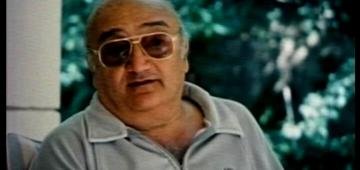
Henrik EdoyanIt’s growing more difficult |
 |
Henri VerneuilHenri Verneuil (Ashot Malakian) is familiar to Armenian audience by his film “Mayrig (Mother)”. In 2010 his family was in Armenia. Golden Apricot International Film Festival granted him posthumous award for his contribution to cinema. Patrick, son of Henri Verneuil, worked as an assistent in the film. “It was very difficult to work with my father”, - recalls Patrick. “Offscreen” tells about the house of Verneuil-Malakian and creation of the film “Mayrig”, there are exclusive shots from the film used in the TV program. |
 |
Vardan AchemianRenowned theatre worker, director, National Artist of USSR Vardan Achemian contributed greatly to the history of Armenian theatre. Achemian studied in Russia guided by Stanislavski, Nemerovich-Danchenko. However, he returned to Armenia and became one of the founders of Drama Theatre of Leninakan... It is here that he staged his first plays with a splendid and accentuated style so typical for him – “At the Bottom”, “Honorable Beggars”, “Ara the Beautiful”, “Twelfth Night” etc. At the stage of Sundukyan Theatre, the works “Baghdasar Akhbar” and “My Heart is in the Highlands” were distinguished for their lucid artistic and psychological exposures. Students of the grand master share their memories offscreen.
|