 |
Public Opinion and Justice
How is the opinion on individual rights and institutes guaranteeing those rights developing among public? On the other hand, does this public opinion affect the activities of those institutes, in particular, that of the justice system? The topic is discussed by advocate Tigran Yegoryan and human rights activist Vardan Harutyunyan.The conversation is hosted by Anna Sargsyan.
|
 |
Public Opinion and Art
How much is the public attitude linked to the valuation of a piece of art? To what extent does the public demand affect on the dissemination, development or refusal of any field or piece of art? The topic is discussed by Doctor of Arts, NAS corresponding member Henrik Hovhannisyan and music expert Mher Navoyan.The conversation is hosted by Anna Sargsyan.
|
 |
Public Opinion and Social NormsCandidate of philosophical sciences Henrik Grigoryan and cultural anthropologist Aghasi Tadevosyan analyse the mechanisms how public opinion affects social behavior norms. How does public opinion set forth social behavior norms? Why and how do opinions change among society? The conversation is hosted by Anna Sargsyan. |
 |
Public Opinion and LanguageWhat is the language of political journalism, how does it affect the public opinion? The topic is discussed by poet Armen Davtyan and writer Mesrop Harutyunyan. The conversation is hosted by Anna Sargsyan. |
 |
Public Opinion and MediaWhat is public opinion, where is it formed, in what manner does an ordinary opinion turn into an all-mightly public opinion? The topic is discussed by GeghamVardanyan, editor-in-chief of Media.am, a project of the Media Initiatives Center, and media expert Samvel Martirosyan.The conversation is hosted by Anna Sargsyan. |
 |
Blessing of Muron in National LifeWhy is the ceremony of Muron blessing crucial in our lives, what historical events lie behind the importance of Muron blessing in the national life? How strong does that ceremony of Muron blessing unite the Armenians? The topic is discussed by historian Petros Hovhannisyan and Father Ararat Poghosyan, Director of the Library of Old Manuscripts of the Mother See of Holy Etchmiadzin. The conversation is hosted by Anna Sargsyan. |
 |
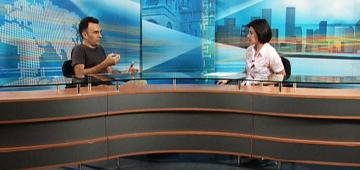
The Child and Society: Inclusive EducationWhat does it mean “child-centered”? How is it expressed in daily life and in public education system? Why is the inclusive education considered to be the most humanistic model in the world nowadays? The topic is discusses by psychologist AnushAlexanyan and ethnographer RuzanTsaturyan. The conversation is hosted by Anna Sargsyan. |
 |
Armenians in Ottoman EmpireOttoman Turkey destroyed the Armenian capital, which was the most active and creative element of its Empire, thus actually destroying or weakening its own self, its own country. Was the Armenian Genocide the consequence of political ignorance? The pavilion of Third Millennium hosts the Project Director for Houshamadyan Research Association Vahe՛ Tachjian. The conversation is hosted by Anna Sargsyan. |
 |
Memory of Genocide and CinemaThis year, the 12th Film Festival Golden Apricot had two new program to commemorate the Genocide victims. A number of films produced by Armenian and foreing authors were screened both in Armenia, as well as abroad. From what prospective does cinema view the topic of Genocide, what does the audience expect from such films? The topic is discussed by journalist Nune Hakhverdyan and film critic Raffy Movsisyan. The conversation is hosted by Anna Sargsyan. |
 |
Memory of Genocide – factor for consolidation of nationThe topic of Genocide as a factor of collective memory, is one of the essential components of our collective identity and unity. Why? How can we overcome the trauma if it stands in the core center of our national identity? How can the national identity in its turn, be transformed under such circumstances? The topic is discussed by historian Smbat Hovhannisyan and ethnographer Mkhitar Gabrielyan. The conversation is hosted by Anna Sargsyan. |
 |
Armenian Genocide: Overcoming the ConflictHow can we characterize the Armenian Genocide as a conflict? What role may these wide-scope initiatives of the centenary of the Genocide play in solving the conflict between the Armenian and Turkish societies? The topic is discussed by conflictologist Artak Ayunts and journalist Tatul Hakobyan. The conversation is hosted by Anna Sargsyan. |
 |
Overcoming the Consequences of Genocide in Educational ContextWhat concept is assumed by overcoming the consequences of genocide in educational context? The topic is discussed by Doctor of Philosophical Sciences Serob Khachatryan and the Headmaster of Mkhitar Sebastatsi Education Comples Ashot Bleyan. The conversation is hosted by Anna Sargsyan. |