 |
Sermon of Mount: “Judge not, that ye be not judged” (Matth. 7:1-6, Luke 6:37-38, 41-42). part 2
Why does the Lord bring the example of the speck of the eye and the log?
Rev. Father Ruben Zargarian continues providing explanations on the passage.
|
 |
Sermon of Mount: “Judge not, that ye be not judged” (Matth. 7:1-6, Luke 6:37-38, 41-42). part 1
Why does the Lord bring the example of the speck of the eye and the log?
Rev. Father Ruben Zargarian provides explanations on the passage.
|
 |
Modern Museum: Why and How
In the modern world, the perception of the museum is also changing. They are not perceived merely as a place of preservation, display and study of historical and cultural exhibits, but also predent for much greater social and cultural functioning. How justified is this approach? How close to what extent are the museums in Armenia ready and open to changes, and what is needed for the development of museums?
Hayk Hambardzumyan spoke about these issues with the Director of Charents Museum of Literature and Art Karo Vardanyan.
|
 |
Gevorg Barseghyan
“When I got sick, for a moment I was offended from God. My mother gave me one important councel… And when I was attending the renovation of our church, even the doctors would get surprised at the stabilization of my health. I know where my strength comes from…”
Gevorg Barseghyan from Martuni considers that what happened to him to be a miracle.
|
 |
Associaction of Good Acts: Armenian Businessmen of Germany
In 2001, an Armenian association was established in Cologne, Germany, by the Armenian businessmen residing in Germany. The goal of the association was to help Armenians settled in foreign countries and Armenia.
|
 |
Armenian Language - Regulated and Free from Rules
Numerous practical problems in the use of modern Armenian language in terminology, literacy, orthography, verbal, punctual, oral and written Armenian are always subject to discussions and disputes. The "Supreme Council of Armenian Language" was established to discuss, coordinate, and consult these issues. How is the board to carry out this work, what functions does it have, and through what means and levers are language-related decisions will come into life?
Hayk Hambardzumyan talked about these issues with Yuri Avetisyan, Head of the Chair of Armenian Language at YSU, Doctor of Philological Sciences.
|
 |
Woman and Poetry
What are the characteristics of women's poetry, how justified is the distinction between the poem of a man and a woman? What does the Armenian reader expect from modern poetry and how much does the modern Armenian poetry touch upon the reader's concerns?
Hayk Hambardzumyan talked to poetess Nona Poghosyan about these issues.
|
 |
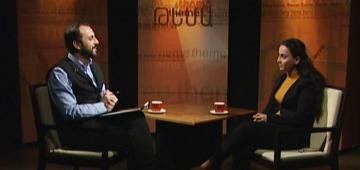
The Sermon of Mount: “And Deliver Us from the Evil One” (Matth. 6:13)
“But deliver us from the evil one”: Rev. Father Ruben Zargarian continues providing explanations on the passage.
|
 |
Youth TV Channel
Although young people are constantly part of film-related events, involved in the film festivals in Armenia, however, just like in almost every field, young people have fewer opportunities to realize their projects, receive state funding and compete with elders.
Hayk Hambardzumyan spoke with film director Khane Poghosyan.
|
 |
The Believers of St. Khach and Astvatsatsin Churches of Aparan
The believers of of St. Khach and Astvatsatsin Churches of Aparan testify telling about what happened to them personally or their relatives.
Since usually most of the believers avoid or are shy to testify, the priest encourages the believers on telling them the importance of testimony and bringing examples from the Bible.
|
 |
The Sermon of Mount: Teaching on Giving (Matth. 6:1-4)
When talking about giving in the Sermon of Mount, Jesus specifically warned about secret giving without fanfare. When you do good, your right hand should be unaware of what the left hand does. Rev. Father Ruben Zargarian continues providing explanations on the passage.
|
 |
The Sermon of Mount: Teaching on Fasting (Matth. 6:16-18)
When talking about fasting, why does the Lord brings the example of hypocrites, why does he command not to have sad countinence and instead to anoint their heads and wash their faces? Rev. Father Ruben Zargarian continues providing explanations on the passage.
|