 |
History of NationThe TV series presents the history of the Armenian Church. The subject of Part A is the spread of Christianity in Near East, Armenian Mesopotamia (King Abgar) and in very Armenia (preaching of Apostles Thaddeus and Bartholomew). The TV series are run by the author Artak Gnuni, PhD in History, archeologist. |
 |
Unction of the SickUnction of the sick is a sacrament through which the priest helps the sick person get relieved from mental and physical maladies. In which cases should it take place, what is it aimed to, what is required for the ceremony? Topics are covered by Father Vardan Navasardyan. |
 |
Baptism: the riteBaptism is one of the seven sacraments of the Armenian Church. Why does the Armenian Church encourage baptism of children? Why does the priest bestow a different name to the newly baptized? How shall the adults who want to get baptized be prepared for the Baptism? How should one treat his/her own self and life after the Baptism? Why is double Baptism unacceptable? Topics are covered by Father VardanNavasardyan. |
 |
CommunionHoly Communion is one of the sacraments of the Armenian Church. It is considered as the sacrament of salvation for the believer. What does it mean to commune with the Christ Risen, why is the fulfillment of that specific sacrament deemed as miraculous? Can thesacrament change one's life? How to get prepared for the Communion? Father VardanNavasardyan is explaining the realization of human to human and human to God relationships accomplished through the sacrament of Holy Communion. |
 |
Wedding (Holy Matrimony), Part 2-րդThe sacrament of wedding is one of the holy sacraments of the Armenian Church. Why does the Armenian Church put much emphasis on the family unity, what is the position of the Church on domestic violence or abortion, is the wedding sacrament unique just like the Baptism? When is the divorce or second-time marriage allowed? What shall the couples do if they didn’t get married in the Church? All topics are covered and exhorted by Father Vardan Navasardyan. |
 |
Wedding (Holy Matrimony), Part 1Nowadays, many people treat the sacrament of wedding as a simple tradition. While the sacrament of wedding is one of the holy sacraments of the Armenian Church. It is through this sacrament that the message of the Disciple is being set forth: what God has united let no man part. How should one treat the wedding, marriage and fidelity in family, what is the wedding procedure, what conditions are defined by the Armenian Church for the wedding? These issues are covered by Father Vardan Navasardyan. |
 |
Penitence, part 2There are two types of confession distinguished in the Armenian Church -- individual and collective. Every believer has the freedom to choose his/her priest to confess to. According to the canon of the Armenian Church, the priest who makes the secret communicated by the confessor public, shall be liable to a most strict punishment. |
 |
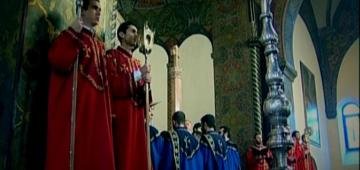
Ordination, part 3The order and symbolism of ordination of priests, bishops and catholicos is explained by Father Vardan Navasardyan. What is the holy naming and consecration, what responsibility and loyalty are the ordinates called upon? |
 |
Ordination, part 1The person that is called to serve the church through Ordination, receives power and grace to perform ecclesiastical ceremonies, preach the Gospel, invite people to penitence and pass grace. What responsibility and power does the ordained priest assume? What are the preconditions for being ordained as a priest of the Armenian Church? What is the main mission of the priest? The sacrament is explained by Father Vardan Navasardyan. |
 |
Hayk GhazaryanHayk Ghazaryan, Doctor of historical sciences, has been involved in the review of the Armenian issue since 1957. Together with Rev. Fr. Ruben Zargarian, the historian talks about potential ways of international recognition of the Armenian Genocide, the compensation for and elimination of consequences of the Genocide. H. Ghazaryan also addresses the Treaty of Se`vres, Woodrow Wilson’s Arbitral Award, as well as the issues related to the Armenian-Turkish border. |
 |
Jacqueline KaraaslanianIt’s been four years, since around 260 young Armenians get higher education or continue to study in the best foreign universities owing to the scholarships provided by Armenia based Luys Foundation. However, the issues are not solved just by quality higher education: will a graduate of Oxford University ever want to return Armenia, can our country ensure adequate conditions and high salaries for them to apply their knowledge, how many has returned Armenia and work up today?
|
 |
Clinical DeathIt is accepted to think that death is the termination of vital functions of live body. In the borderline of life and death, there is a condition called clinical death. Only in rare cases one returns from death to life. The desciption of people who experienced clinical death are almost the same: dark tunnel, white shimmering light, meeting with the dead… Doctor Artur Hakobyan experienced clinical death and remembers every single detail of those fantastic feelings he had for just a few minutes. Father Kyuregh Talyan is convinced that death would have been terrible had we not the hope of resurrection. |