 |
The Great Mission of the Mekhitarist Brotherhood in Armenian Studies
In the "Taghavar" program, Father Ararat Poghosyan and prose writer Hovhannes Yeranyan discuss the founding, historical trajectory, and long-standing activities of the Mekhitarist Brotherhood.
Under what historical conditions did the early period of the Mekhitarist Brotherhood begin—in the late 17th and early 18th centuries—and who were the initial figures who brought Armenian culture to Venice? How did Mekhitar Vardapet Sebastatsi strive to keep the torch of Armenian literature and scholarship burning; who stood in his way; and why did his efforts to establish this educational system in Armenia or Constantinople fail? How was the island of San Lazzaro (Surb Ghazar) chosen, and who are the notable figures associated with the Brotherhood?
|
 |
The Artsakh Issue and the Armenian Church
Father Ararat Poghosyan and prose writer Hovhannes Yeranyan discussed the Armenian Church’s historical, educational, cultural, and identity-preserving mission in Artsakh—spanning the Soviet era and the reopening of the diocese to the 44-day war and the forced displacement. They addressed the protection of the rights of Artsakh’s people, the return of captives held in Baku, the preservation of cultural heritage, and the Church’s ongoing initiatives, emphasizing that Artsakh—now excluded from the state agenda—is not merely a matter of the past, and that historical justice must be restored.
|
 |
The Armenian Genocide and the Armenian Church
In the "Taghavar" studio, Reverend Father Ararat Poghosyan and prose writer Hovhannes Yeranyan discussed the losses suffered by the Armenian Church, the preservation of the memory of the Genocide, and the Church's role as a major center for humanitarian aid. They also addressed the massacres of the late 19th century, the significance of the 2015 canonization, and the Church's responsibility regarding the restoration of historical justice.
|
 |
The architecture and spiritual meaning of the Mother CathedralFather Ararat Poghosyan and prose writer Hovhannes Yeranyan spoke in “Taghavar” about the architecture of the Mother of God Cathedral, the changes it has undergone throughout history, and the recent renovation. They also touched on the spiritual and symbolic significance of the Cathedral, the national-popular council for its construction and renovation, as well as the holidays dedicated to the Mother Cathedral in the ritual calendar. |
 |
Armenia's Independence and the Armenian Apostolic Holy Church
Father Ararat Poghosyan and prose writer Hovhannes Yeranyan spoke in "Taghavar" about the new opportunities opened up for the activity of the Armenian Church after Armenia's independence, and noted the important role that the church has played in modern Armenian history.
They touched upon the atheistic pressures and limited activity of the Church during the Soviet years, the role of the Church in the Artsakh movement, as well as the development of church-state relations and today's challenges.
|
 |
The Role of the Armenian Clergy in the Armenian Heroic Battles
Father Ararat Poghosyan and prose writer Hovhannes Yeranyan spoke in "Taghavar" not only about the active participation of the Armenian clergy from Avarayr to the heroic battle of Sardarapat, but also about the birth and maturation of the legend of the liberation struggle in the arms of the Armenian Church.
|
 |
New strategy of education and science. part 211With Professor Michelle Kyulhandjian of Rice University in Houston, Hovhannes Yeranyan discussed the activities of ASOF, the association of Armenian scientists, programs to support science and education in Armenia, and the results of the scientific conference held in Dilijan on June 25-28. |
 |
The Lost Polish-Armenian Community
Father Ararat Poghosyan and prose writer Hovhannes Yeranyan spoke in “Taghavar” about the lost Polish-Armenian community, highlighting the role of the Armenian Apostolic Church and the Armenian faith in preserving identity.
|
 |
The Activities of the Gevorgyan Theological Seminary
Father Ararat Poghosyan and prose writer Hovhannes Yeranyan spoke at the Pavilion about the Gevorgyan Theological Seminary as a forge for the development of Armenian culture, science, and political thought.
|
 |
The reasons for the destruction of the capital of Ani
Father Ararat Poghosyan and prose writer Hovhannes Yeranyan discussed the reasons for the surrender of Ani, the capital of the Bagratid kingdom, and the loss of statehood, as well as the historical lessons.
|
 |
Khrimyan Hayrik
The topic of the next program in the series in the Pavilion, which is discussed by Father Ararat Poghosyan, Director of the Matenadaran and Publishing Department of the Mother See of Holy Etchmiadzin, and prose writer Hovhannes Yeranyan, is the activities of Khrimyan Hayrik, both before and especially after his election as Catholicos. What is the current meaning of his "iron ladle" message?
|
 |
Historical and Current Phases of Emigration
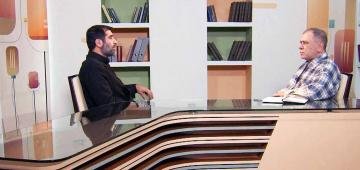
Father Ararat Poghosyan and prose writer Hovhannes Yeranyan discuss the historical and current phases of emigration and the significant role of the Armenian Church in preserving Armenians in the Diaspora in the Pavilion.
|