 |
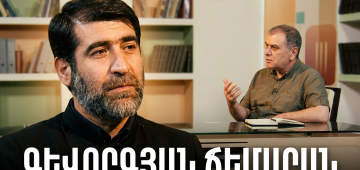
The Lost Polish-Armenian Community
Father Ararat Poghosyan and prose writer Hovhannes Yeranyan spoke in “Taghavar” about the lost Polish-Armenian community, highlighting the role of the Armenian Apostolic Church and the Armenian faith in preserving identity.
|
 |
The Activities of the Gevorgyan Theological Seminary
Father Ararat Poghosyan and prose writer Hovhannes Yeranyan spoke at the Pavilion about the Gevorgyan Theological Seminary as a forge for the development of Armenian culture, science, and political thought.
|
 |
The reasons for the destruction of the capital of Ani
Father Ararat Poghosyan and prose writer Hovhannes Yeranyan discussed the reasons for the surrender of Ani, the capital of the Bagratid kingdom, and the loss of statehood, as well as the historical lessons.
|
 |
Khrimyan Hayrik
The topic of the next program in the series in the Pavilion, which is discussed by Father Ararat Poghosyan, Director of the Matenadaran and Publishing Department of the Mother See of Holy Etchmiadzin, and prose writer Hovhannes Yeranyan, is the activities of Khrimyan Hayrik, both before and especially after his election as Catholicos. What is the current meaning of his "iron ladle" message?
|
 |
Historical and Current Phases of Emigration
Father Ararat Poghosyan and prose writer Hovhannes Yeranyan discuss the historical and current phases of emigration and the significant role of the Armenian Church in preserving Armenians in the Diaspora in the Pavilion.
|
 |
The invention of Armenian writingDuring the episode of the program "The Invention of Armenian Writing" on ""In the pavilion", Father Ararat Poghosyan and prose writer Hovhannes Yeranyan discuss one of the greatest events in Armenian history and culture - the invention of Armenian writing. What role did the church play in this process and what did this greatest event give to the Armenian people? |
 |
Persecutions against the Armenian Church during the Soviet Atheism
The author of the program series “In the Pavilion”, prose writer Hovhannes Yeranyan and the director of the Matenadaran and Publishing Department of the Mother See of Holy Etchmiadzin, Father Ararat Poghosyan, will discuss the relationship between the Armenian Apostolic Church, Armenian history, and Armenian culture in the coming months. The topic of the first program is the persecution and violence against the Armenian Church during the Soviet Atheism. How was the church able to emerge victorious from that difficult situation, and what does it remind us of today?
|
 |
Vazgen I
The influence of Catholicos Vazgen I on the prosperity of the Seminary was great. In 1945-51, the Seminary had 35 students, of whom only 6 managed to graduate. In the first years of Vazgen I’s Catholicosate, only 60 students arrived from the Diaspora. Vazgen I did everything to ensure that the Church became one of the most effective bridges uniting Armenia and the Diaspora.
|
 |
Sculptor Ara Sargsyan
Writer Hovhannes Yeranyan tells about the activities of sculptor and painter Ara Sargsyan. At a young age, he was involved in the NEMESIS operation and discovered the former Turkish prime minister in Italy, after whom the program participants killed him, Ara Sargsyan left for Vienna to study. In reality, it was a business trip to discover the leaders of the Young Turks in Germany.
|
 |
Hasmik
Writer Hovhannes Yeranyan tells about the path of actress Hasmik Papyan. She was the first actress to be awarded the title of People's Artist. She was also the first female deputy of the Supreme Council. Yeghishe Charents dedicated a poem to her on the occasion of the thirtieth anniversary of her activities.
|
 |
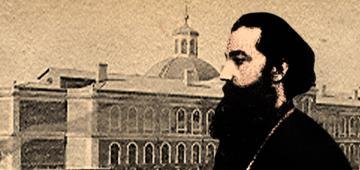
Yeghishe TadevosyanYeghishe Tadevosyan is one of the most prominent Armenian painters of the 19th-20th centuries. He spent his childhood in the Mother See. After graduating from the Moscow Art School, he was appointed a teacher of painting at the Gevorgyan Theological Seminary. |
 |
Vahagn DemirchoghlyanA student of the Gevorgyan Seminary, who is ordained a priest and serves in the Igdir church, independently achieves such successes in the field of atomic physics that amaze and amaze the greatest scientists in the field. |