
 |
Martyrs of the Regime, Part 3: Priests of the Armenian Church
In 1930-1936, 109 priests were repressed by the Bolshevik authorities. In total, 148 clergy were repressed in Soviet Armenia by 1938. 209 cases of violence were recorded against them, from imprisonment to torture and execution. The main accusations were anti-Soviet agitation, nationalism and counter-revolution. The false criminal cases and fabricated charges brought against the clergy were revealed years later. All the repressed were acquitted due to the lack of evidence of the crime.
Blessed names in the Armenian Church calendar, their martyrdom is commemorated every year, at the Holy Liturgy, along with 148 repressed Armenian clergy.
The Armenian Church has seen and experienced Bolshevism
|
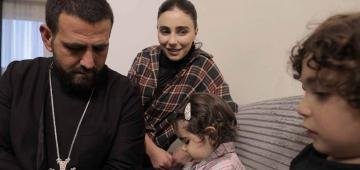 |
Father Maghakia GevorgyanFather Maghakia Gevorgyan, who has served in the Aragatsotn diocese for more than 25 years, has never seen persecution of priests or violation of their rights in the church. He has never heard from the leaders that they should be silent or tolerate injustices occurring in the church; on the contrary, they have always had opportunities to raise issues. He believes that priesthood teaches humility. |
 |
Writer, playwright, painter and film director Aghasi AyvazyanIn the Pavilion: Literature and Art program, prose writer Hovhannes Yeranyan presents the high literary and artistic merits of the story "The Price of an Ordinary Man" by writer, playwright, painter, and film director Aghasi Ayvazyan. |
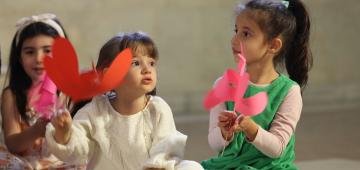 |
Light Has OpenedThe music for the song "Light Has Opened" is by Argina Harutyunyan, accompanied by pianist Liana Torosyan. The children, together with singer and songwriter Hasmik Baghdasaryan-Dolukhanyan, perform songs by contemporary Armenian composers, folk songs, and songs by Komitas. Hasmik Baghdasaryan-Dolukhanyan aims to popularize children's songs by contemporary composers through children's performances. Puppet master Aghasi Melkonyan, by staging a small performance with the participation of children, makes the song more vivid and interesting. |
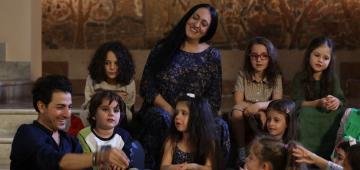 |
"Kele, kele"Komitas "Kele, kele", accompanied by pianist Liana Torosyan. The children, together with singer and songwriter Hasmik Baghdasaryan-Dolukhanyan, perform songs by contemporary Armenian composers, folk songs, and songs by Komitas. Hasmik Baghdasaryan-Dolukhanyan aims to popularize children's songs by contemporary composers through children's performances. Puppet master Aghasi Melkonyan, by staging a small performance with the participation of children, makes the song more vivid and interesting. |
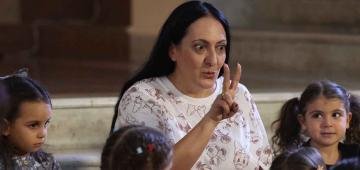 |
Two Cats
The music for the song "Two Cats" is by Robert Petrosyan, accompanied by pianist Liana Torosyan.
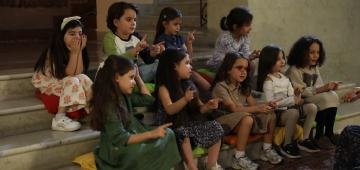
The children, together with singer and songwriter Hasmik Baghdasaryan-Dolukhanyan, perform songs by contemporary Armenian composers, folk songs, and songs by Komitas. Hasmik Baghdasaryan-Dolukhanyan aims to popularize children's songs by contemporary composers through children's performances. Puppet master Aghasi Melkonyan, by staging a small performance with the participation of children, makes the song more vivid and interesting.
|
 |
The Clock
The music for the song “Clock” is by Geghuni Chtchyan, accompanied by pianist Liana Torosyan.
The children, along with singer and songwriter Hasmik Baghdasaryan-Dolukhanyan, perform songs by contemporary Armenian composers, folk songs, and songs by Komitas. Hasmik Baghdasaryan-Dolukhanyan aims to popularize children’s songs by contemporary composers through children’s performances.
|
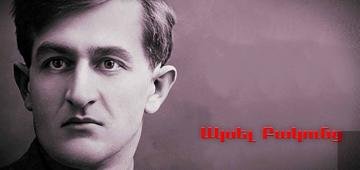 |
Aksel BakuntsWhat role did the film "Zangezur" play in the life of screenwriter Aksel Bakunts and what influence did it have on his fate? Novelist Hovhannes Yeranyan talks about the film "Zangezur" and Aksel Bakunts. |
 |
Spyridon MelikyanComposer Spyridon Melikyan left behind symphonic and choral works. As a conductor, he raised Armenian choral art to a new level. As an ethnographer, he saved a great treasury of folk songs from oblivion. As a scholar, he examined the theoretical issues of Armenian music in a new light. The former seminarian’s entire life was a service to Armenian music and Armenology. |
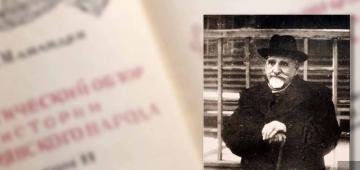 |
Hakob AnandyanHakob Manandyan was one of the great scientists who, by teaching at the Gevorgyan Theological Seminary, had turned that institution into the world's largest center of Armenology. Manandyan spoke more than ten languages, and taught history as well as various languages at the seminary. He wrote more than 150 scientific works in Armenian, Russian, and German. After the seminary was closed, when the first state university was opened, Manandyan became the head of the history department, and then was elected rector of the university. He was one of the founding academicians of the National Academy of Sciences. When the scientist was reminded of his great merit, he replied that all this should be considered a tribute of gratitude to the seminary, where he spent his best years. |
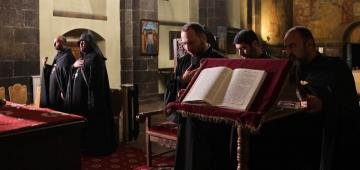 |
My worldIn 2010, 15 deacons received priestly ordination and anointing from the Primate of the Aragatsotn Diocese, Bishop Mkrtich Proshyan. Today, they serve in various dioceses in Armenia and the Diaspora. On the 15th anniversary of their ordination, the brothers from the diocese gathered and visited their spiritual father, the illegally imprisoned Archbishop Mkrtich. |
 |
Hrachya KocharHrachya Kochar was one of the most influential figures in Soviet Armenia in the 1950s and 1960s. The people called his summer residence in Lusakert the building of the Presidium of the Supreme Council. Here, the leaders of the republic discussed important issues for the country with the writer. Prose writer Hovhannes Yeranyan tells about the life path and legacy of the writer and controversial person Hrachya Kochar. |