 |
Hogevor paterazm. neratsut’yun 29 Spiritual Warfare: An IntroductionWhat is spiritual warfare, how is it expressed, and against whom is it directed? Archimandrite Ruben Zargaryan explains |
 |
Man looks at the face of man, but God looks at the heartAccording to Father David Gishyan, the saying “Man looks at the outward appearance, but God looks at the heart” is taken from the Bible’s First Book of Kings. The prophet Samuel was to anoint young David as king. God tells Samuel: “Do not look at his appearance or at the height of his stature. People look at the outward appearance, but God looks at the heart.” |
 |
What you sow is what you reapFather David Gishyan believes that Physical Laws help build our external, spiritual laws, our spiritual life. The Apostle Paul, in the sixth chapter of his letter to the Galatians, notes that life is a field where we reap what we have sown in the past. Our present is the harvest of what we have sown in the past. |
 |
God sees the mountain and makes it snow.Father David Gishyan believes that the folk saying “God sees the mountain, he puts the snow” has spiritual roots connected with the first letter of the Apostle Paul to the Corinthians. According to him, the difficulties of life are given to man by God out of exceptional trust. God gives us trials corresponding to our abilities and at the same time suggests ways to overcome them. |
 |
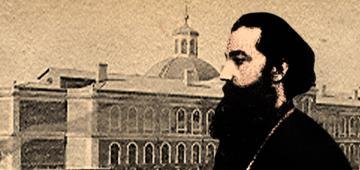
Yeghishe TadevosyanYeghishe Tadevosyan is one of the most prominent Armenian painters of the 19th-20th centuries. He spent his childhood in the Mother See. After graduating from the Moscow Art School, he was appointed a teacher of painting at the Gevorgyan Theological Seminary. |
 |
Vahagn DemirchoghlyanA student of the Gevorgyan Seminary, who is ordained a priest and serves in the Igdir church, independently achieves such successes in the field of atomic physics that amaze and amaze the greatest scientists in the field. |
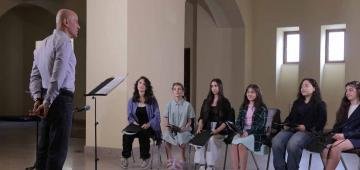 |
Khorurd KhorinA profound prayer, excerpt from the Holy Liturgy, arranged by Archimandrite Komitas. Performed by the male choir of the Holy Cross Church in Arabkir. |
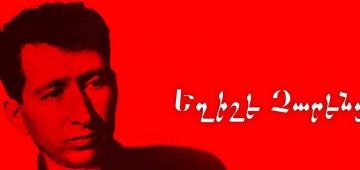 |
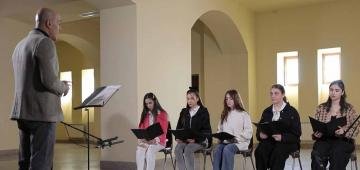
Yeghishe Charents: Road BookDuring the next program of the series “In the Pavilion: About Literature and Art,” prose writer Hovhannes Yeranyan talks about the influence of his collection Road Book on the fate of Yeghishe Charents, about the poet’s persecution and death. |
 |
Heavenly Father and Almighty God, you are blessedThe liturgist has already pronounced the famous words of Christ: "Take, eat..." and "Drink in the Spirit...", after which we begin to bless the Holy Trinity: God the Father, the Son, and the Holy Spirit, asking for mercy and forgiveness of sins. We begin with the Heavenly Father, after which we say "Blessed are you, Lord." Excerpt from the Holy Liturgy, arranged by Archbishop Komitas. Performed by the male choir of the Holy Cross Church in Arabkir. |
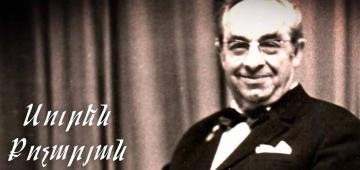 |
Suren KocharyanIn the Pavilion: Literature and Art program, prose writer Hovhannes Yeranyan tells about Suren Kocharyan, one of the most original and talented artists of Armenian and Soviet stage art. |
 |
Son of God
With this song we turn to the Son of God, Christ, who was sacrificed for us, for our sins, that is, sacrificed, in order to reconcile us, people, with God the Father, for the forgiveness of our sins.
Son of God, excerpt from the Holy Liturgy, arranged by Komitas Vardapet. Performed by the male choir of the Holy Cross Church of Arabkir.
|
 |
Spirit of GodThe Spirit of God, the third person of the Holy Trinity, to whom we turn especially in commemoration of the dead and for the salvation of their souls. Spirit of God, you who fulfill the mystery of your glorified one (Christ) through our hands... Performed by the male choir of the Holy Cross Church of Arabkir. |