 |
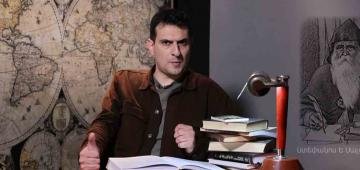
The Forerunner of the Armenian Liberation Movement: Hakob IV of Jughayetsi
In 1677, Hakob IV of Jughayetsi convened a meeting in the Mother Cathedral of Holy Etchmiadzin, where the Armenian elite gathered. They decided to form a delegation headed by the Catholicos, which was to travel to Europe. The delegation was to negotiate with the Pope of Rome, the leader of Poland, who had anti-Turkish sentiments. For the first time, the Catholicos sent a letter about liberation to the Russian leader Alexei Mikhailovich, the father of Peter the Great.
|
 |
“He who gives to the poor lends to God”
“He who gives to the poor lends to God” This proverb comes from the book of Proverbs: “He who is kind to the poor lends to the Lord” (Proverbs 19:17). This biblical message reveals the true meaning of mercy. Our neighbor is the living image of God, and by helping the needy, we are not simply doing charity, but we are demonstrating our love in action. Father David Gishyan explains how God has hidden Himself in the face of the needy, and how mercy makes a person partaker of the essence of divine love.
|
 |
Khrimyan Hayrik
The topic of the next program in the series in the Pavilion, which is discussed by Father Ararat Poghosyan, Director of the Matenadaran and Publishing Department of the Mother See of Holy Etchmiadzin, and prose writer Hovhannes Yeranyan, is the activities of Khrimyan Hayrik, both before and especially after his election as Catholicos. What is the current meaning of his "iron ladle" message?
|
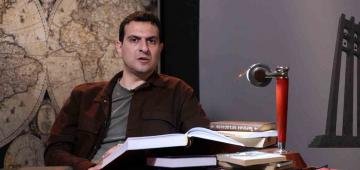 |
The Armenian Church in the Whirlwind of the May Heroic Battles
From January 28, 1918, the Turkish army launched a large-scale offensive and appeared in the Ararat Valley on May 21. The leadership of the newly formed Armenian state, influenced by the chain of concessions, suggested to Catholicos Gevorg Surenyants that he leave Holy Etchmiadzin, because in a few days it would be captured. The Catholicos did not agree and sent celibate clergy to the front, led by the prominent scholar Bishop Garegin Hovsepyans. The bells of all churches rang with the call to wake up, and a psychological breakthrough began that overwhelmed the military-political leadership. The victorious heroic battles of Sardarapat and Aparan took place, thanks to which the Armenians were not only saved from final destruction, but also the modern Armenian statehood in the form of a republic was created.
|
 |
Historical and Current Phases of Emigration
Father Ararat Poghosyan and prose writer Hovhannes Yeranyan discuss the historical and current phases of emigration and the significant role of the Armenian Church in preserving Armenians in the Diaspora in the Pavilion.
|
 |
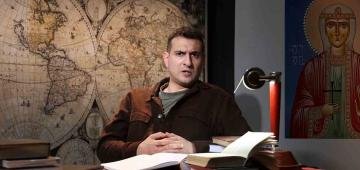
“Better a blind eye than a blind mind”
“Better a blind eye than a blind mind”: this ancient proverb reveals the vital importance of spiritual vision. How is physical vision connected to spiritual enlightenment? Father David Gishyan interprets this popular saying based on the healings of Christ and the messages of the Bible. Why is spiritual blindness more dangerous for a person, and how can we gain the ability to see the truth through our Lord Jesus Christ, the “light of the world.”
|
 |
Medieval Armenian Historiography as a Civilizational Phenomenon
Armenian historiography is a civilizational phenomenon. The transmission of historical knowledge from generation to generation as a mechanism for the reproduction of historical memory varies among different peoples. Among Armenians, on the one hand, we have the principle of written transmission in the form of historiography and the oral principle, which was transmitted in the form of epics, reached its highest form by the 19th century and was written down starting from 1874.
|
 |
“Do good, throw it into the water”
The folk proverb “Do good, throw it into the water. The fish will not know, God will know” refers to the following expression made by Christ in the Sermon on the Mount: “Be careful not to do your alms to people. Otherwise, you will not receive a reward from your Father who is in heaven.”
“When you do alms, do not let your right hand know what your left hand is doing. Father David Gishyan has interpreted folk sayings and proverbs and the biblical wisdom condensed in them.
|
 |
An oath is a sin, a false oath is fireThe Lord Himself warned that a person will have to answer for every empty word he utters on the Day of Judgment. In the Old Testament, people confirmed their words with an oath, referring to the Creator, but our Lord Jesus Christ came out against this spiritual disease and addressed a message to all of us in the Sermon on the Mount: “Do not swear falsely, but let your word be ‘Yes’, yes, and ‘No, no.’ For anything more than that is from evil.” |
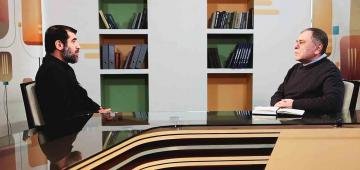 |
The invention of Armenian writingDuring the episode of the program "The Invention of Armenian Writing" on ""In the pavilion", Father Ararat Poghosyan and prose writer Hovhannes Yeranyan discuss one of the greatest events in Armenian history and culture - the invention of Armenian writing. What role did the church play in this process and what did this greatest event give to the Armenian people? |
 |
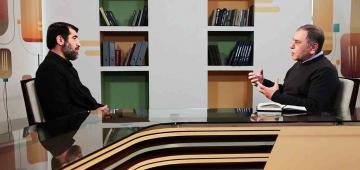
The Guest is from GodThe folk proverb “The Guest is from God" characterizes our national peculiarity, namely, that every person who enters our threshold is a person of God and with our attitude we express our reverence for the Creator. There are many proverbs and sayings in our folklore on this topic. |
 |
Persecutions against the Armenian Church during the Soviet Atheism
The author of the program series “In the Pavilion”, prose writer Hovhannes Yeranyan and the director of the Matenadaran and Publishing Department of the Mother See of Holy Etchmiadzin, Father Ararat Poghosyan, will discuss the relationship between the Armenian Apostolic Church, Armenian history, and Armenian culture in the coming months. The topic of the first program is the persecution and violence against the Armenian Church during the Soviet Atheism. How was the church able to emerge victorious from that difficult situation, and what does it remind us of today?
|