 |
The Carpet Collection of the Mother See
For centuries, carpets have been kept in the treasury of the Mother See of Holy Etchmiadzin as cultural treasures. These carpets are not simply decorative objects, but eloquent witnesses of a culture. The collection of the Mother See was formed not as a result of planned collection, but as a result of time, donations and historical upheavals. Under the care of His Holiness Karekin II, Catholicos of All Armenians, the collection is currently being supplemented with the aim of becoming a complete material for a carpet museum in the future.
|
 |
Luke the Evangelist’s Prologue (1:1-4)
Who was the addressee of the Gospel of Luke, Theophilus, which means God-loving? There is a version that Luke, having been sent to Rome by the Apostle Paul, converted a centurion named Theophilus, to whom he later dedicated his Gospel. According to another version, Theophilus was the judge who was to pass sentence on the Apostle Paul and Luke wrote this Gospel to save his teacher. According to a third version, Theophilus is a collective figure and by saying Theophilus, Luke means all those who love God. Father Markos Mangasaryan interprets verses 1-4 of the first chapter of the Prologue to the Gospel of Luke.
|
 |
The Source of AuthorityWhy is the source of judicial, legislative, and executive authorities considered divine? Archimandrite Ruben Zargaryan explains. |
 |
Introduction
Although Luke the Evangelist was a physician by profession and a contemporary of Jesus Christ, he never had the opportunity to see Christ in person and follow Him. He becomes a colleague of the Apostle Paul and writes down the Gospel. The Gospel of Luke presents the easiest and most graphic material for the reader. It is a Gospel of prayer. Only in the Gospel of Luke are there the parables of the Unjust Judge and the Widow, the Good Samaritan, and the Prodigal Son. The introduction to the Gospel of Luke is presented by Father Markos Mangasaryan.
|
 |
Spiritual Warfare: WeaponryWhy does spiritual warfare take place in our hearts? According to the anthropology of the Holy Bible, what place is our heart? Archimandrite Ruben Zargaryan explains. |
 |
Holiday Culture: Ruzanna TsaturyanNew Year - a new day The cultural meaning of New Year in Armenian reality is, first and foremost, the end of the old and the acceptance of the new. And especially on New Year's, the Armenian table was abundant and delicious. And when the family gathers around the table, remembering, sharing, and being grateful, New Year goes beyond the competition of luxury, the danger of gluttony, and bread becomes a symbol of the continuation of life, wheat and pilaf - of fertility, honey and dried fruits - a symbol of a sweet life. |
 |
Modern Music: Vache SharafyanMusic, of course, maintains a connection with its time. But contemporary music is not limited to the time of its creation. It forms a new language, a new form, a new way of thinking. Also, a unity of memory and idea. |
 |
Art and Audience: Bridging the Distance
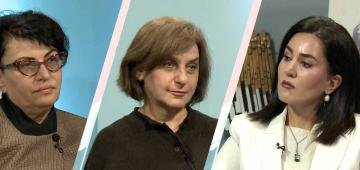
In order to fill the gaps in the field of cultural journalism and reduce the gap between the artist and society, the ARE Cultural Foundation, in partnership with the Institute of Contemporary Art, with a grant from the Embassy of the Kingdom of the Netherlands in Armenia, has initiated a free journalism course for those covering culture and art. Marine Karoyan, Founding Director of the ARE Cultural Foundation, and Narine Safaryan, Head of the Educational Department of the Media Initiatives Center, spoke about the “Art and Audience: Bridging the Gap” project at “Artfocus”. The program was hosted by art critic Anahit Margaryan.
|
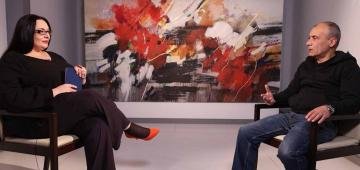 |
One shotThe changes in the culture and mindset of short film and short films in the last decade have in turn led to a society expecting short and concise things to say. However, the magic of cinema continues to remain in the hall with the lights turned off, in the deep silence. The most important and real feeling in the history of the creation of the documentary film “Hevq” by Gagik Ghazare, a participant in the 44 Days, is the Land. There is nothing more real than the Land. |
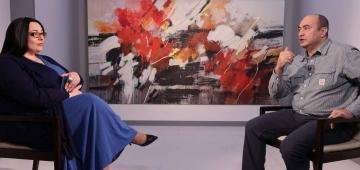 |
The lost sounds of dying instrumentsArmenian national musical instruments are diverse and have a history spanning thousands of years. However, today only the duduk is very popular, unlike other instruments, which are also called “dying instruments.” By rediscovering the lost sounds of dying instruments, perhaps we will be more complete and balanced. |
 |
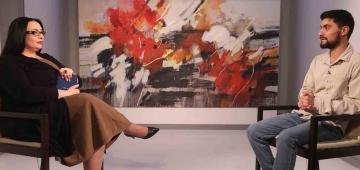
The musical programs of the "Kayt Cultural Center""Kayt Cultural Hub" is an interdisciplinary ecosystem that unites several organizations, dozens of artists and musicians, as well as hundreds of students to ensure the life cycle of Armenian culture, from preservation to development. The acquired knowledge and experience are transformed into tangible results: books, recordings and albums, films and videos, as well as public performances, handicrafts. Tatevik Shakhkulyan, Senior Researcher of the Music Department of the Institute of Arts of the National Academy of Sciences, Candidate of Arts, Conservatory Lecturer, spoke at "Artfocus" about the musical programs of the "Kayt Cultural Hub". |
 |
National danceNational dance is the living environment where the character, value system, and historical experience of our people have been preserved. National dance reflects our spirit, our collective strength, and our inner discipline. Knowledge of national dance is not a technical skill, but a deep recognition and awareness of national identity. How did the Genocide, deportations, and repressions of the Soviet period against the Armenian people affect and what consequences did they have on national dance? |