 |
Armenian “Zham” in MoscowPeriodic press has traditionally played an important role in preserving national identity, representing national culture and values within the community and among foreigners. At present, the development of internet seem to have changed this situation, yet the periodicals keep being published. What is the demand for Armenian cultural magazines published abroad, what plans and objectives do they pursue?
|
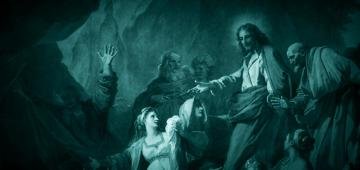 |
Gospel of Mark 7. 14-23“Jesus called all the people unto him, he said unto them, there is nothing from without a man that entering into him can defile him: but the things which come out of him, those are they that defile the man”.
|
 |
Awaiting Professional SayArt criticism used to have different functions, objectives and significance in different times. Theoretical literature defines criticism as the organizer of creative process, acting as a mediator between the reality and the artist, the art and the reader, the listener and the viewer. What functions and significance does the critical-professional word have today, who should it be addressed and is there respective environment to use that word in?
|
 |
Gospel of Mark 7. 1-13“Now when the Pharisees gathered to him, with some of the scribes who had come from Jerusalem. They saw that some of his disciples ate with hands that were defiled, that is, unwashed. (For the Pharisees and all the Jews do not eat unless they wash their hands properly,[a] holding to the tradition of the elders”.
|
 |
Armenian socialists and the GenocideOn June 15, 1915, 20 leaders of Social Democrat Hunchakian Party were executed in the square Bayazet of Constantinople. What was the reason for hanging them, how realistic their plans were and was the socialistic ideology beneficial for the solution of the Armenian question?
|
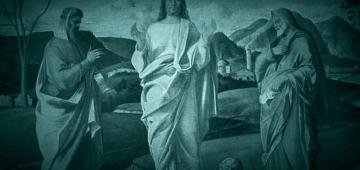 |
Gospel of Mark 6. 45-56After the multiplication of the bread, Christ rose on a mountain to be alone and pray. Then He noticed his disciples caught in the whirlwind of the sea on the verge of shipwreck. This is when Christ came down, walked on the water which scared His desciples.
|
 |
Image of DisasterThe massacres, and later the Genocide of the Western Armenians left deep and incurable traces on the psychology and world view of our nation, found their reflection in the literature and art. Painters of various generations, painters of diverse artistic principles, starting from Hovhannes Ayvazovski up to ourday painters, have addressed this topic. How was the topic of Genocide fulfilled in the Armenian painting, how is it possible, if ever, to picture?
|
 |
guest: Hrayr AslanyanHrayr Aslanyan, the head of Public Health Division, RA Ministry of Health, claims that the Ministry of Health has sufficient studies and justifications on the need for flour enrichment, excess or lack of iron and other vitamins in Armenia. These studies and justifications will be circulated, published by the end of the year, i.e. before the enforcement of the law. The guest presents professional intermediation and assures that according to preliminary studies, the statistics on anemia in Armenia, and consequently, the infertility and child mortality is alarming and urgent measures should be taken. |
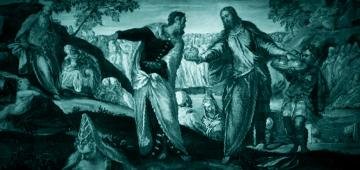 |
Gospel of Mark 6. 30-44The Disciples of Christ told Him that the crowd was hungry; hence they had to be released to go to nearby farms for food. However, Christ asked them to get content with what the Disciples had – the five loaves and two fish. He took the food, blessed it and multiplied it to the extent that it sufficed a crowd of five thousand and they got full.
|
 |
guest: Babken PipoyanBabken Pipoyan, the Founding Chairman of “Informed and Protected Consumer” NGO claims, that the Ministry of Health hasn’t provided sufficient studies and justifications on the need for flour enrichment, excess or lack of iron and other vitamis in Armenia. The results of studies should be transparent and that process should involve diverse layers of society. |
 |
Modern Painting: Why and How?To fulfill the creative capacities of young artists, along with other conditions, international cooperation, various exchange program and joint work are of great importance. What will the change of environment, his works and exhibitions abroad, bring to the Armenian painter? Why and how does the young Armenian artist create in Armenia at present? Hayk Hambardzumyan spoke about these issues with painter Tigran Kirakosyan. |
 |
Gospel of Mark 6. 14-29John the Baptist was beheaded by the order of Herod Antip. Who requested such an order to be issued, and what followed next? Who was Herodias and how did she relate to the order of the King?
|