 |
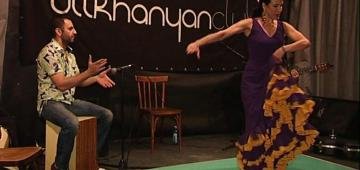
Flamenco Night at Ulikhanyan ClubArmenians create in Spanish style, they perform and astonish. The band Los Locos presented a flamenco night at Ulikhanyan Club. The band members Ashot Voskanyan and Tigran Ayvazyan were joined by guests from Toronto and Marseille – dancer Christine Arzoumanian and bass guitarist Alan Jean.
|
 |
Vladimir HarutyunyanVladimir Harutyunyan is a businessman from Moscow. He develops management projects for companies dealing with oil and gas mining and sale. Our hero has always had a keen interest in the black gold market. He has even written a book about it. He used to be the director of "Soyuz Oil Export" in Soviet times. He has a large family of 4 children and 13 grand-children. The humanitarian was again in his homeland, visiting Kecharis monastery complex, which is under restoration thanks to his donations. |
 |
Garo TertzakianAmerican Armenian physician, philanthropist, was born in Lebanon. He received his primary education in Nishan Palandjian College and studied medicine in the American University of Beirut. This is where he met his future wife, Sylvie, who came from Jerusalem. They moved to US after they got married. At present, they reside in Santa Ana, California (Orange County). They live happily with their children Talin and Aram. |
 |
Artak GulianArmenian Monastery complex of Moscow is a weighty architectural and cultural presence in the Armenian Diaspora. The complex includes big and small churches, the building of Armenian Prelacy in Russia, cultural, educational institutions, and also reception facilities. This construction fully adheres to the national architectural principles and represents one of the works of architect Artak Gulian. |
 |
How to ConfessThere are two methods for the sacrament of confession -- general and individual. A believer may attend the general confession before or during the Divine Liturgy. Confession is one part of the 7 sacraments of our Church -- repentance. Spiritual Fathers have given a number of keys to clean the spirit. These can be helpful for us today, in particular, in the period of Lent, in the face of the glorious Resurrection of Jesus Christ. |
 |
NazariansNazar and Artemis Nazarians bear the honorable name of National philanthropists. For decades, Nazarian family stood beside the Armenian Church, contributed to the community, educational and social program of Armenia and Diaspora, served as the advocate and propagator of preservation of the Armenian identity. One of the major programs in Armenia was the construction of the Chancellery of Mother See of Holy Etchmiadzin, the YSMU Radiology Center, and new AGBU office. The undertakings of Nazarians were highly appreciated by the Presidents of independent Armenia, spiritual leaders. Charity is the expression of genuine Christian faith and spirit. It is this idea that guides the noble family of Nazarians. His Holiness Karekin II, Catholicos of All Armenians makes a speech of appreciation in the film about Nazarians. The participants include also Ashot Ghazarian, Director of AGBU (1991-2011), Bishop Arshak Khachatrian, Mother See Chancellor, Father Partev Barseghian, Mother See Vice Chancellor, Marina Movsesyan, radiologist in YSMU Radiology Center, Vasken Yacoubian, Central Board member of AGBU, as well as Nazar and Artemis Nazarians and their grandson - Mathew Nazarian. |
 |
Support to Syrian ArmeniansThe war which broke in March, 2011, shattered the normal lives of Armenians too, living in Syria. Around 70 thousand Armenians reside in Syria, or used to reside, before the break of civil war. Approximately 7000 Syrian Armenians immigrated to Armenia for the last year, of which over 90% found shelter in Yerevan. Most of them needed house, food, essential supplies, education and job. In response to the needs of immigrants, the World Council of Churches, Inter-Church Round Table Foundation of Armenia initiated "Rapid Support to Syrian Refugees in Armenia" project. The film tells about the program implemented with the support of "Action by Churches Together for Development" Act Alliance. |
 |
The Spirit of our FathersThe Battle of Avarayr is not just a mere memory. It walked along Armenians throughout the course of history, provided newer energy and served as an example of patriotism, which was made apparent during the Artsakh war. The film "The Spirit of our Fathers" addresses the importance of the Battle of Avarayr in historical, political, ethical, spiritual sense. Why Vardanank (the Vardsns) specifically became a symbol in the wars faught for the sake of faith and the Homeland? How could people compare the Vardans for centuries compare with its present time, what is the modern perception of the Vardan commanders? These are the main issues discussed by the literary critics Vazgen Safaryan, Vardan Devrikyan, historians Petros Hovhannisyan, as well as Bishop Hovakim Manukyan, a military Armenak Avagyan. |
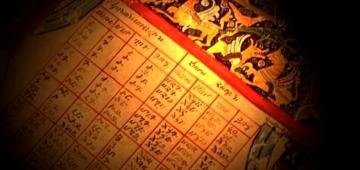 |
Tomar (calendar)Tomar is the synonym of the the word 'calendar'. There is a commonly known opinion, based on which the calendar was created in the result of human economic activity. In Grigor Brutian's opinion, a tomar specialist, this is a one-sided and faulty approch. Tomar is a system for time division and it has to do, in the first place, with religion and human understanding of relegion. The bronze brace discovered in 1946, in Sanahin, a number of pictograms found in Syunik, testify that our ancestors had a rather developed knowledge of calendar. Why does the Armenian Church celebrate the Holy Birth (Christmas) in January 6, what are the historical events behind the tradition of celebrating the New Year in January? |