 |
The Artsakh Issue and the Armenian Church
Father Ararat Poghosyan and prose writer Hovhannes Yeranyan discussed the Armenian Church’s historical, educational, cultural, and identity-preserving mission in Artsakh—spanning the Soviet era and the reopening of the diocese to the 44-day war and the forced displacement. They addressed the protection of the rights of Artsakh’s people, the return of captives held in Baku, the preservation of cultural heritage, and the Church’s ongoing initiatives, emphasizing that Artsakh—now excluded from the state agenda—is not merely a matter of the past, and that historical justice must be restored.
|
 |
The Armenian Genocide and the Armenian Church
In the "Taghavar" studio, Reverend Father Ararat Poghosyan and prose writer Hovhannes Yeranyan discussed the losses suffered by the Armenian Church, the preservation of the memory of the Genocide, and the Church's role as a major center for humanitarian aid. They also addressed the massacres of the late 19th century, the significance of the 2015 canonization, and the Church's responsibility regarding the restoration of historical justice.
|
 |
The architecture and spiritual meaning of the Mother CathedralFather Ararat Poghosyan and prose writer Hovhannes Yeranyan spoke in “Taghavar” about the architecture of the Mother of God Cathedral, the changes it has undergone throughout history, and the recent renovation. They also touched on the spiritual and symbolic significance of the Cathedral, the national-popular council for its construction and renovation, as well as the holidays dedicated to the Mother Cathedral in the ritual calendar. |
 |
Armenia's Independence and the Armenian Apostolic Holy Church
Father Ararat Poghosyan and prose writer Hovhannes Yeranyan spoke in "Taghavar" about the new opportunities opened up for the activity of the Armenian Church after Armenia's independence, and noted the important role that the church has played in modern Armenian history.
They touched upon the atheistic pressures and limited activity of the Church during the Soviet years, the role of the Church in the Artsakh movement, as well as the development of church-state relations and today's challenges.
|
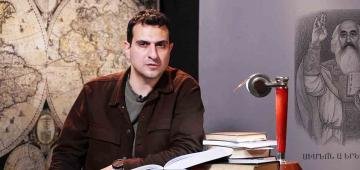 |
The underappreciated figure of the 18th century: Simeon I, Patriarch of YerevanThe Ottoman Empire conquered Eastern Armenia in 1724-1731. The Persian Shah Nadir managed to push them back, and the situation of the Armenians improved. After his death, the situation worsened again. Armenia was attacked by Dagestan tribes in the 1750s. Part of the Armenian population was forced to leave their native settlements. Catholicos Simeon of Yerevan organized a census of Armenian households (families living under one roof) and estates in all settlements, then expelled the foreign element and returned the Armenian population to about ten villages. He also took the greatest step of modernization in his time: he founded a printing house in Holy Etchmiadzin, thanks to which Armenian knowledge could be widely disseminated. |
 |
The Role of the Armenian Clergy in the Armenian Heroic Battles
Father Ararat Poghosyan and prose writer Hovhannes Yeranyan spoke in "Taghavar" not only about the active participation of the Armenian clergy from Avarayr to the heroic battle of Sardarapat, but also about the birth and maturation of the legend of the liberation struggle in the arms of the Armenian Church.
|
 |
Archbishop Nerses Melik-Tangyan
In the bloody era of chaos, wars and the collapse of empires of the early 20th century, a clergyman lived and worked, whom the Tsarist gendarmerie called a "dangerous revolutionary", the Soviet Cheka organized assassination attempts against him, and the Armenians of Iran and Syunik considered him their savior and shepherd.
Archbishop Nerses Melik-Tangyan, Primate of the Armenian Diocese of Atrpatakan. A man who stood with the cross in his hand at the forefront of statehood.
|
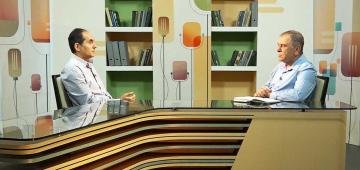 |
New strategy of education and science. part 211With Professor Michelle Kyulhandjian of Rice University in Houston, Hovhannes Yeranyan discussed the activities of ASOF, the association of Armenian scientists, programs to support science and education in Armenia, and the results of the scientific conference held in Dilijan on June 25-28. |
 |
The Lost Polish-Armenian Community
Father Ararat Poghosyan and prose writer Hovhannes Yeranyan spoke in “Taghavar” about the lost Polish-Armenian community, highlighting the role of the Armenian Apostolic Church and the Armenian faith in preserving identity.
|
 |
"One with one, two with God."This proverb reveals the secret of spiritual unity, the presence of the Lord in our relationships. How can a simple human relationship be transformed into a spiritual union? Father David Gishyan explains why only people gathered in the name of Christ can truly unite. |
 |
Everything has its time
“Everything has its time.” This mysterious message from the book of Ecclesiastes has become an inseparable companion of the life of the Armenian people. What is hidden in this succession of times? Father David Gishyan explains how life’s difficulties and achievements become part of the divine plan.
|
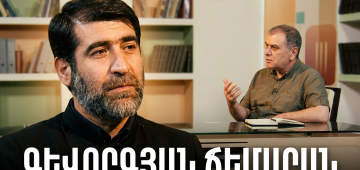 |
The Activities of the Gevorgyan Theological Seminary
Father Ararat Poghosyan and prose writer Hovhannes Yeranyan spoke at the Pavilion about the Gevorgyan Theological Seminary as a forge for the development of Armenian culture, science, and political thought.
|