 |
The right to life: "suicide and self-sacrifice"In the Christian understanding, life does not belong to anyone, since the source of life is God, therefore, encroachment on the life of another is a gross violation of the commandment “Thou shalt not kill,” but encroachment on one’s own life is also a gross violation. Why does Jesus say that blasphemy against the Holy Spirit is the unforgivable sin among all kinds of sins, and how is it equivalent to choosing death by suicide? Archimandrite Ruben Zargaryan comments. |
 |
The invention of Armenian writingDuring the episode of the program "The Invention of Armenian Writing" on ""In the pavilion", Father Ararat Poghosyan and prose writer Hovhannes Yeranyan discuss one of the greatest events in Armenian history and culture - the invention of Armenian writing. What role did the church play in this process and what did this greatest event give to the Armenian people? |
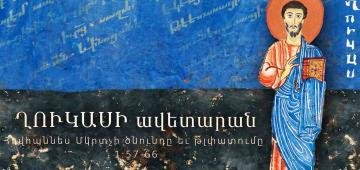 |
The birth and circumcision of John the Baptist (1:57-66)Luke the Evangelist focuses on human emotions in a unique way. How are the birth and circumcision of John the Baptist presented in verses 57-66 of the first chapter of the Gospel of Luke? Father Markos Mangasaryan comments. |
 |
Priestly Ordination and Consecration Held at the Mother See on the Feast of Apparition of the Holy CrossA priestly ordination and consecration ceremony was held at the Mother See under the presiding authority of His Holiness Karekin II, Catholicos of All Armenians. The celebrant was Archbishop Nathan Hovhannisyan, Director of the Department of External Relations and Protocol of the Mother See. He ordained and consecrated 7 deacons serving in various church structures. |
 |
Kirants Village Holy Trinity Church Reconsecrated
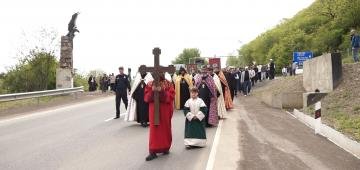
Pilgrims set off from the village of Acharkut to Kirants Holy Trinity Church. The pilgrimage was led by the Prelate Vicar of the Diocese of Tavush, Father Samvel Vardapet Mkhitaryan, along with priests serving in the communities of the diocese. The church, built in 1888, was reconsecrated by Archbishop Haykazun Najaryan, a member of the Mother See of Holy Etchmiadzin. After the Divine Liturgy, the Order of the Holy Cross was performed and the four corners of the world were blessed.
|
 |
Time for accountability for vandalism and its “justifications”
The Stepanakert Cathedral of St. Jacob and the Cathedral of the Holy Mother of God have been destroyed. Azerbaijanis are also circulating media threats about the intention to destroy the monument “We are our mountains”. The Caucasus Muslims Board and representatives of the RA government are “justifying” the international crime, declaring it an action committed “on the sovereign territory of Azerbaijan”. Does this exempt them from responsibility? Anna Sargsyan spoke with Gor Margaryan, an analyst at the Geghard Scientific-Analytical Foundation, Associate Professor of Yerevan State University.
|
 |
Persecutions against the Armenian Church during the Soviet Atheism
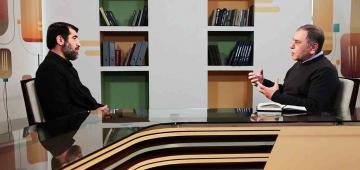
The author of the program series “In the Pavilion”, prose writer Hovhannes Yeranyan and the director of the Matenadaran and Publishing Department of the Mother See of Holy Etchmiadzin, Father Ararat Poghosyan, will discuss the relationship between the Armenian Apostolic Church, Armenian history, and Armenian culture in the coming months. The topic of the first program is the persecution and violence against the Armenian Church during the Soviet Atheism. How was the church able to emerge victorious from that difficult situation, and what does it remind us of today?
|
 |
Mary’s Visit to Elizabeth (1:39-45)
Luke writes in the Gospel: Mary went with haste to Elizabeth to share her joy. And when she entered the house of Zechariah, she greeted Elizabeth, and the baby leaped in her womb. Immediately after these words, Luke says: Elizabeth was filled with the Holy Spirit and said, “Blessed are you among women, and blessed is the fruit of your womb.”
In the first chapter of the Gospel of Luke, verses 39-45, the visit of the Virgin Mary to Elizabeth is presented. Father Markos Mangasaryan comments.
|
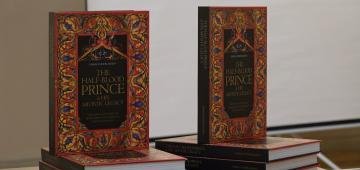 |
A work on Prince John and the Grner School of Miniature Painting has been published
The English volume entitled “The Half-Blood Prince and His Artistic Legacy” is the third monograph on Cilician miniature painting by Emma Chougaszyan, PhD in Art and Medieval History at the University of Montpellier. Archbishop John, brother of King Hetum I, founded the Grner School of Miniature Painting and is considered the founder of a new direction in miniature painting in Cilicia in the second half of the 13th century. This cleric, of royal origin, was the greatest patron of the arts and sciences in Cilicia at that time.
|
 |
The Mother See has published the work of German historian Michael Hezemann on the Armenian Genocide
The book, written based on unpublished documents from the Vatican Secret Archives, addresses the Armenian Genocide. Michael Hezemann, studying numerous valuable documents, testimonies, letters and reports kept in the Vatican archives, irrefutably reaffirms the reality of the Armenian Genocide and its planned implementation.
|
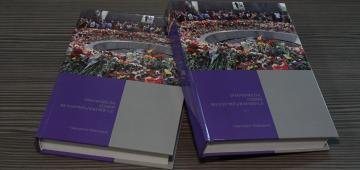 |
Harutyun Marutyan's monograph "Commemorating the Armenian Genocide" has been translated into Armenian
The monograph of Doctor of Historical Sciences, ethnographer Harutyun Marutyan is the result of nine years of research. The author presents the mechanisms of overcoming the collective memory of the Armenian Genocide and historical trauma, the chronology and geography of the commemoration ceremonies of the Great Genocide. The author has addressed many of the topics in articles on various platforms and in scientific journals. Harutyun Marutyan's monograph "Commemorating the Armenian Genocide" was published in English, and now the Armenian edition is also on the reader's desk.
|
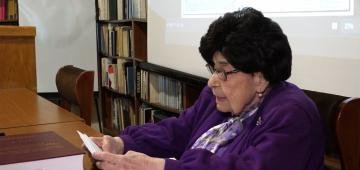 |
Verzhine Svazlyan is preparing to publish a new book on the Turkish-speaking folklore of Western Armenians
In the reading room of the Institute of Archaeology and Ethnography, the scientist presented the materials she wrote down and recorded between 1955 and 2025, which concerned the forced conversion of Western Armenians to Turkish in the Ottoman Empire and Turkish-speaking folklore. Armenian-letter Turkish literature was the means of communication for more than half a million Turkish-speaking and non-Armenian Armenians who were forcibly Islamized. The works of world classics and famous authors of the time were translated into that language.
|